Sunday, April 27, 2014

Morrissey - Autobiography

One of my favorite highly specific sub-genre categories is British rock star autobiographies. Last year I read Pete Townshend's and the year before Keith Richards'... so now I've tackled Morrissey's retelling of his life story.

Like most British rock star autobiographies, we start in a poor working class British town (in this case Manchester) and learn about the parents and how difficult they had it. Right away Morrissey shows that he has real skill in writing about his hometown and gives us a good bit of vivid imagery such as "... we live in forgotten Victorian knife-plunging Manchester, where everything lies wherever it was left over one hundred years ago. The safe streets are dimly lit, the others not lit at all, but both represent a danger that you're asking for should you find yourself out there once curtains have closed for tea." But after a few pages of this Morrissey starts cataloging all of his favorite childhood movies, tv shows, songs, etc. It starts out interesting but after awhile it just becomes too much information about pop culture that I've never heard of before. Then he goes on and on about how badly he was treated in school (mostly by teachers) and how he only found comfort in the band The New York Dolls and whatever bands came through Manchester. It seems that once Morrissey is a fan of something he is quite passionate about it and once he gains fame he tries to bring these artists new fans (such as his quest to reform the New York Dolls and making sure Jobriath finally gets a CD release).

Morrissey Autobiography cover.jpgFinally after 150 pages or so, he finally meets Johnny Marr and the Smiths are quickly formed. At this point he just complains about how horrible the management of the Rough Trade label was and how they took advantage of him, Still he seems unhappy about everything even though they sell out most of their US concert tour. Then all too quickly the Smiths break up and it is never really clear why this happens, maybe Morrissey himself doesn't really know, it would be interesting to hear Marr's version of events on this.Morrissey then starts out on a pretty good solo career and finds himself selling out huge concert venues yet he still feels alone, grumpy and upset at his label and the British print media.

Then he tells the story of why the Smiths will never ever reform... when Mike Joyce (the drummer) sued Morrissey and Marr for a higher percentage of Smiths royalties. He goes on and on about this for about fifty pages and it still seems like a very sore spot for him. After this he moves to Los Angeles and seems relatively happy (for him) and continues with his successful solo career... though he seems oddly obsessed with where his singles land on the music charts as is always disappointed when they don't chart higher.

It was an interesting read and Morrissey does reveal that he is at heart a fan of music/movies/poetry and that he feels the need to refute everything that isn't true that is said about him in the press. Also, he seems really sensitive and does get his feelings hurt my small comments that he still remembers after all of these years. Plus he does seem to have a good bit of self doubt even after he gains a huge following. The book reveals a lot about his character (but nothing that isn't really surprising if you are familiar with his music) but still leaves a lot out about his personal life... as if he still wants to remain a bit of a mystery and preserve the "character" of the miserable lonely rock star that he has cultivated. I'm sure most fans aren't that interested in reading pages and pages of how teachers were mean to him growing up or how stupid the judge in the lawsuit against him was... but would like to know more about his relationships and if he's actually ever been in love or not. And we don't really find that out here. I'll give it a B+.

Monday, March 24, 2014

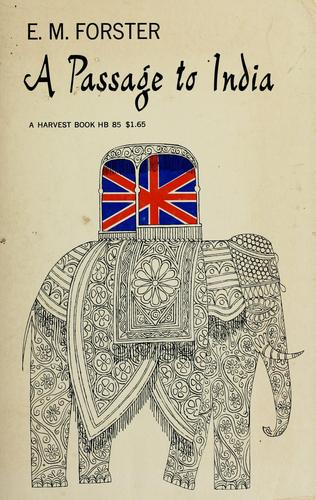
Book # 41 A Passage to India by E. M. Forster

Lucinda and I occasionally discuss whether or not it is better to see the movie version of something before or after reading the book. She seems to always prefer seeing the film first. I however am the opposite. My thinking is that reading the book is more time consuming than watching a film version (except for maybe The Hobbit), so I want to keep the excitement of having the plot unfold for the reading experience. Also, seeing a film version first makes you imagine certain actors while reading the book and takes away some of the imagination one uses while reading. So, I bring all this up because a month before reading A Passage to India we watched the David Lean film version. And I really enjoyed the movie because I really knew nothing at all about the story.

The story is set in British ruled India where Miss Quested is visiting Ronny Heaslop to determine if she should marry him. While there Miss Quested,  Ronny's mother Mrs. Moore and a British headmaster Mr. Fielding befriend an Indian doctor named Aziz. He invites them to visit some caves and *SPOILER* while alone in a cave Miss Quested mistakenly believes that Aziz tried to assault her. Then there's a big trial and everyone gets upset and stuff happens.

So having just seen the movie I couldn't help but imagine the actors while reading the book and knew exactly what was coming in the plot (and the film is fairly faithful to the book except for maybe placing a bit more emphasis on Miss Quested by showing her actually travelling to India and a pretty quick resolution to the misunderstanding between Aziz and Mr. Fielding that ends the story). All that being said I still enjoyed the book and liked the way Forster writes. The only drawbacks to me were that I wasn't familiar with all the Indian terms used throughout the book (and I'll admit laziness to not looking them up) and Forster would frequently make sweeping stereotypical statements about the differences between Indians and the British such as "Suspicion in the Oriental is a sort of malignant tumour, a mental malady, that makes him self-conscious and unfriendly suddenly; he trusts and mistrusts at the same time in a way the Westerner cannot comprehend."

I'd recommend the book and give it an A-. I'm curious though if my opinion would be any different if I hadn't seen the film first.

Friday, March 7, 2014

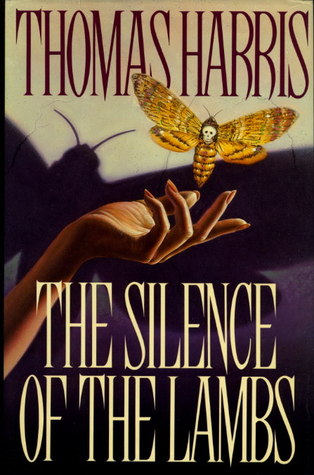
Mystery Book # 16 and Horror Book # 26 - The Silence of the Lambs by Thomas Harris

23807While I was reading The Silence of the Lambs I realized that I really don't remember all that much from the movie. I'll have to watch it again to see how close it is to the book. But what I remembered as the basic story outline from the movie is the same as in the book: FBI agent in training, Clarice Starling, tries to get information out of captured serial killer Hannibal Lecter that could help in the search for another serial killer, Buffalo Bill.

Just like the book that precedes it, Red Dragon, I really enjoyed it and felt that Harris moved the story along at a nice quick pace and gave us enough of a peek into the minds of the characters to know all of their motivations and feelings. Unlike in Red Dragon, The Silence of the Lambs gives us more time with Hannibal and not the actual serial killer that is being chased. I guess I'll eventually have to read the next book in the series even though I've heard it isn't that great.

I can see how the book ranked so high on both the Mystery and Horror lists. It is very readable and every once in a while Harris throws in a nice little poetic sentence to describe a characters feelings or past history. It is also thrilling and scary. I'll have to give it an A.

Sunday, March 2, 2014

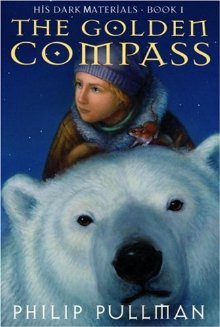
Book # 62 The Golden Compass (His Dark Materials Book 1 of 3) by Phillip Pullman

The Golden Compass (His Dark Materials, #1)The first time I read The Golden Compass was around the time when the movie came out seven or so years ago. I ended up reading the whole series and for the most part enjoyed it even though I had some problems with the final book. Sadly the movie wasn't that great and the whole series never got filmed.

The first book in the His Dark Materials series, The Golden Compass, focuses on a young girl, Lyra. She lives in a sort of alternate fantasy universe which is slightly similar to our world except that there are flying witches, talking armored bears, and everyone has a daemon which is a part of them. A daemon is a sort of spirit that is partnered with each human and takes the form of an animal. As a child a person's daemon can change shape to a variety of animals, but as that person matures the daemon takes a static animal form. Lyra is being raised at Oxford College which is run by the alternate universe's equivalent of the Catholic Church. Her "uncle" Lord Asriel is investigating a mysterious phenomenon called Dust while the church is trying to stop him. There is also Mrs. Coulter who is running experiments that involves kidnapping poor children and then trying to separate their daemons from them. So of course Lyra gets involved in both Lord Asriel's and Mrs. Coulter's plottings and also ends up becoming friends with a talking bear and a cowboy from Texas.

There is a lot of stuff going on and Pullman does a great job of building up this world and the politics of how it works. The only problem is that the first book doesn't tell a self contained story at all and, as I recall, by the third book too much stuff is going on and everything gets jumbled up. But I should wait for my report on the final book to go into that. The first book gets an A-.

Thursday, February 20, 2014

Book # 16 Wuthering Heights by Emily Bronte

You know how sometimes there's a film or book or record that you've heard about your entire life as being such a classic and then when you finally getting around to watching,reading, or listening to it you can't tell what all the fuss was about.... and it isn't that you didn't enjoy it or see some good qualities in it, you just don't see how it is ranked as one of the best ever? Well that sums up my feelings on Wuthering Heights by Emily Bronte.

The story is fairly simple, yet the structure of the story and the way that everyone has multiple names which keep changing and are shared among each other made it a bit confusing to really get into. Basically this man adopts a boy, Heathcliff, and as they grow up he and the man's daughter, Catherine, fall in love with each other. Yet she marries their neighbor Edgar which causes Heathcliff out of spite to marry Edgar's sister. And from this point on everyone acts miserable all of the time and tries to destroy each others' lives. The story continues on with the kids from each pairing, who of course fall in love with each other but are made miserable by the feud between Edgar and Heathcliff.

I enjoyed Bronte's style even if the structure made it a bit confusing. I thought by introducing the children from the end of the story first made me unnecessarily try and figure out all of the relations between all of the characters right away. Also most of the characters were pretty unlikable. Catherine is a total brat, Heathcliff is incredibly selfish and is pretty much always being mean. At first I felt bad for Edgar and also Heathcliff's son, but by the end they both bugged me too.  I'm going to have to give it a B+.

Friday, February 7, 2014

Red Rising by Pierce Brown

Red Rising (Red Rising Trilogy, #1)I saw the review for Red Rising in Entertainment Weekly a couple of weeks ago and I figured I'd give it a shot since it said it was pretty much just a mix of Ender's Game and The Hunger Games... and I did enjoy it. The story is about Darrow, a teenager working in a mine on Mars. Of course his people are oppressed by the rulers of Mars and he ends up with a shadowy group that transforms Darrow into one of the elite ruling class "Golds" in order to infiltrate the government and help take them down. But in order to get a good position in society he must first go through a year long competition in which young Golds are put into groups and forced to play a sort of Survivor/Hunger Games thing first in which a whole bunch of them die. While the book isn't a classic like Ender's Game, it is somewhat better than The Hunger Games and is a bit better written. Of course it is only the first book in a trilogy, so the ending leaves you wanting to know what happens next. B+

Also, the book mentions Ulysses, The Count of Monte Cristo, Lord of the Flies, 1984 and The Great Gatsby.

Thursday, January 30, 2014

S by J.J. Abrams and Doug Dorst


And now for a book not on any of my lists... S by JJ Abrams and Doug Dorst. This book needs a bit of explanation... since it is a pretty original type of book. The name on the cover of the slipcase is S... but inside it is a book titled Ship of Theseus by V.M. Straka. Now this book is made to look like a very old copy from a library and is stuffed full of random things like postcards, articles, letters, pictures and even a napkin that continually try and fall out of the book. Also the margins are completely filled with notes between two people who are sharing the book back and forth... so really there are three different plots going on here.


17860739
First is the text of the book Ship of Theseus by the fictional author Straka. The book tells the strange story of a man with no memory that gets picked up on a weird ghost ship and travels around the world being manipulated to kill people while searching for a woman that he may or may not love or even know. Very strange, intriguing and unique...

Next are the footnotes (and introduction) to the text that seem to reveal another story about the relationship between Straka's translator and Straka himself and a mystery about who the true identity of the author really is. This part really reminded me of Pale Fire.

Third are the handwritten notes in the margins that reveal a story about two students that pass the book back and forth as they try and solve the mystery of who the author really was. They soon start thinking that someone is after them to not solve the mystery of who Straka really was and become more and more paranoid. They also leave random stuff for each other in specific parts of the book.

I have to give the book credit for being an original type of book and I don't really see how it could ever be reprinted in any different format without loosing something. And I was really into it while I was reading it... but in the end I have to give it only a B+.  Mostly because the book brings up so many questions and doesn't answer quite a few of them... especially about what really happens off the pages between the two students. I shouldn't be surprised... after all J.J. Abrams did help create Lost.

Oh yeah...there's a Don Quixote reference too.